Choosing a Pet Urn: Materials, Styles, and What to Consider

After your pet's cremation, you'll receive their ashes in a basic container — usually a plastic bag inside a temporary box. Most families want something more meaningful to hold those ashes. A good urn is both a functional container and a lasting tribute to your pet's place in your home and life.
This guide covers everything you need to know to choose the right pet urn: how to get the size right, what each material offers, which styles fit different homes, and what to consider based on your long-term plans for the ashes.
Step 1: Get the Size Right
🔍 Ready to find a provider?
Get the Free 2026 Pet Cremation Cost Guide
Average costs by state, what's included, and questions to ask providers — free.
Compare trusted pet cremation services in your area — prices, reviews, and direct contact.
Urn sizing is measured in cubic inches, and the rule of thumb is simple:
Rule of thumb: Choose an urn with at least 1 cubic inch of capacity per pound of your pet's body weight. A 20-lb dog needs at least 20 cubic inches; a 60-lb dog needs at least 60 cubic inches.
This works because cremation reduces a body to ash at a ratio of roughly 1 cubic inch per pound of weight. It's better to size up slightly — a 70-cubic-inch urn for a 60-lb dog gives you comfortable room without overpaying for an oversized container.
Quick Size Reference by Pet Type
| Pet Type | Typical Weight | Min. Urn Size | Recommended |
|---|---|---|---|
| Small cat or toy dog | 5–10 lbs | 5–10 cu in | 20–30 cu in |
| Average cat | 10–15 lbs | 10–15 cu in | 25–40 cu in |
| Small dog (Chihuahua, Pomeranian) | 5–20 lbs | 5–20 cu in | 25–40 cu in |
| Medium dog (Beagle, Cocker Spaniel) | 20–50 lbs | 20–50 cu in | 60–80 cu in |
| Large dog (Lab, Golden Retriever) | 50–80 lbs | 50–80 cu in | 100–120 cu in |
| Giant breed (Great Dane, Mastiff) | 80–150 lbs | 80–150 cu in | 180–200 cu in |
| Small animal / bird | Under 5 lbs | 5–10 cu in | 15–20 cu in |
If you're unsure of your pet's exact weight at time of passing, err on the side of a larger urn. Unused space in the urn is not a problem; running out of space is.
🏺 Shop: Pet Urns
Affiliate links — we may earn a small commission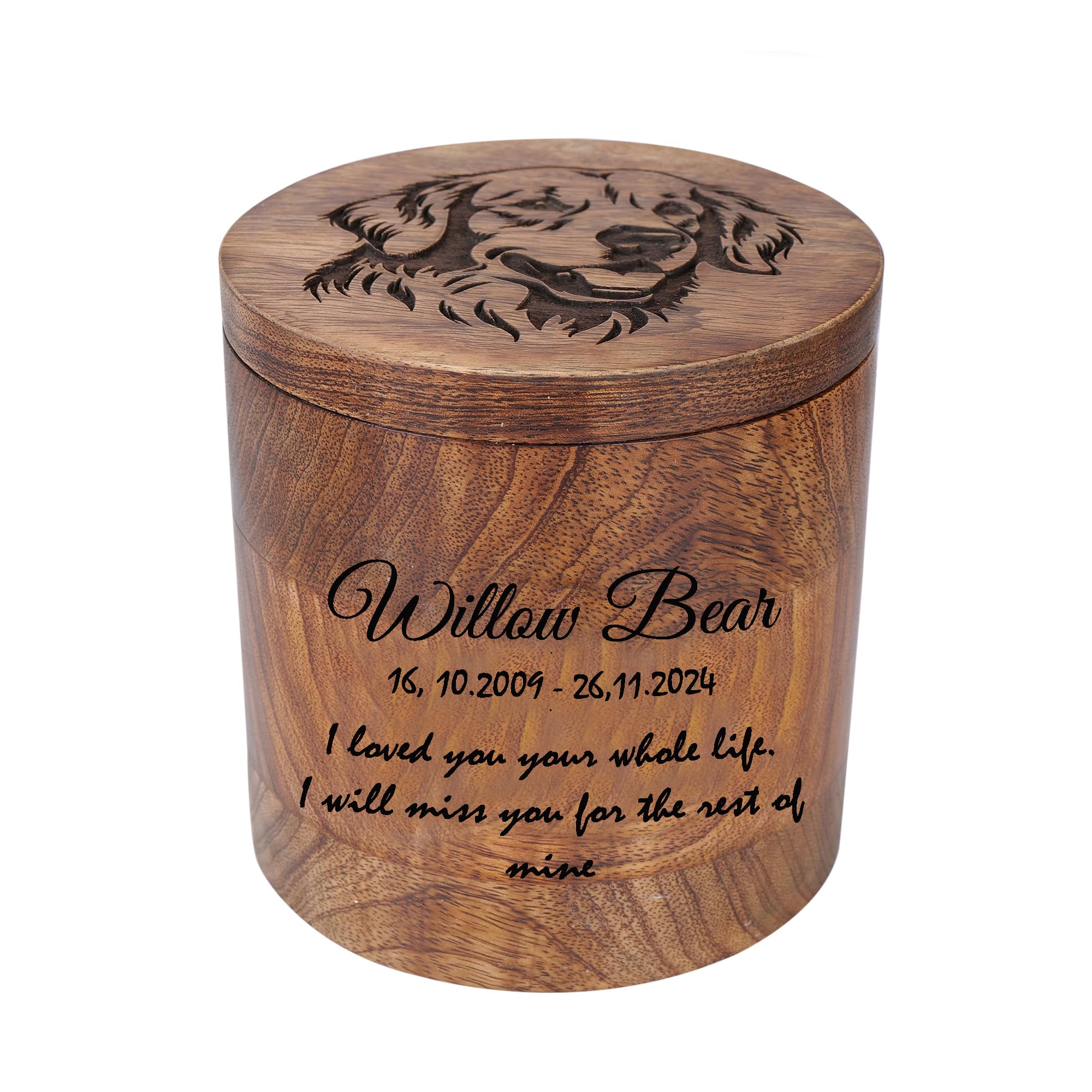
Step 2: Choose Your Material
Urn material affects how it looks, how durable it is, and where it can be placed. Here's an honest breakdown of each option.
Wood Urns
Wood is the most popular material for pet urns — and for good reason. A well-made wood urn feels like furniture, not a memorial container. It blends naturally into a home environment on a bookshelf, mantle, or side table without looking clinical or somber.
Common woods include walnut, cherry, oak, maple, and bamboo. Most have a hinged or removable lid with a felt lining inside. Many can be laser-engraved with your pet's name, dates, and a short message.
Best for: Indoor home display. Long-term keeping at home. Families who want the urn to feel like a piece of furniture.
Price range: $35–$150 for standard sizes. Personalized engraving adds $15–$40.
Not ideal for: Burial (wood degrades over time in soil, though that may be acceptable). Humid environments (can warp over years).
Ceramic Urns
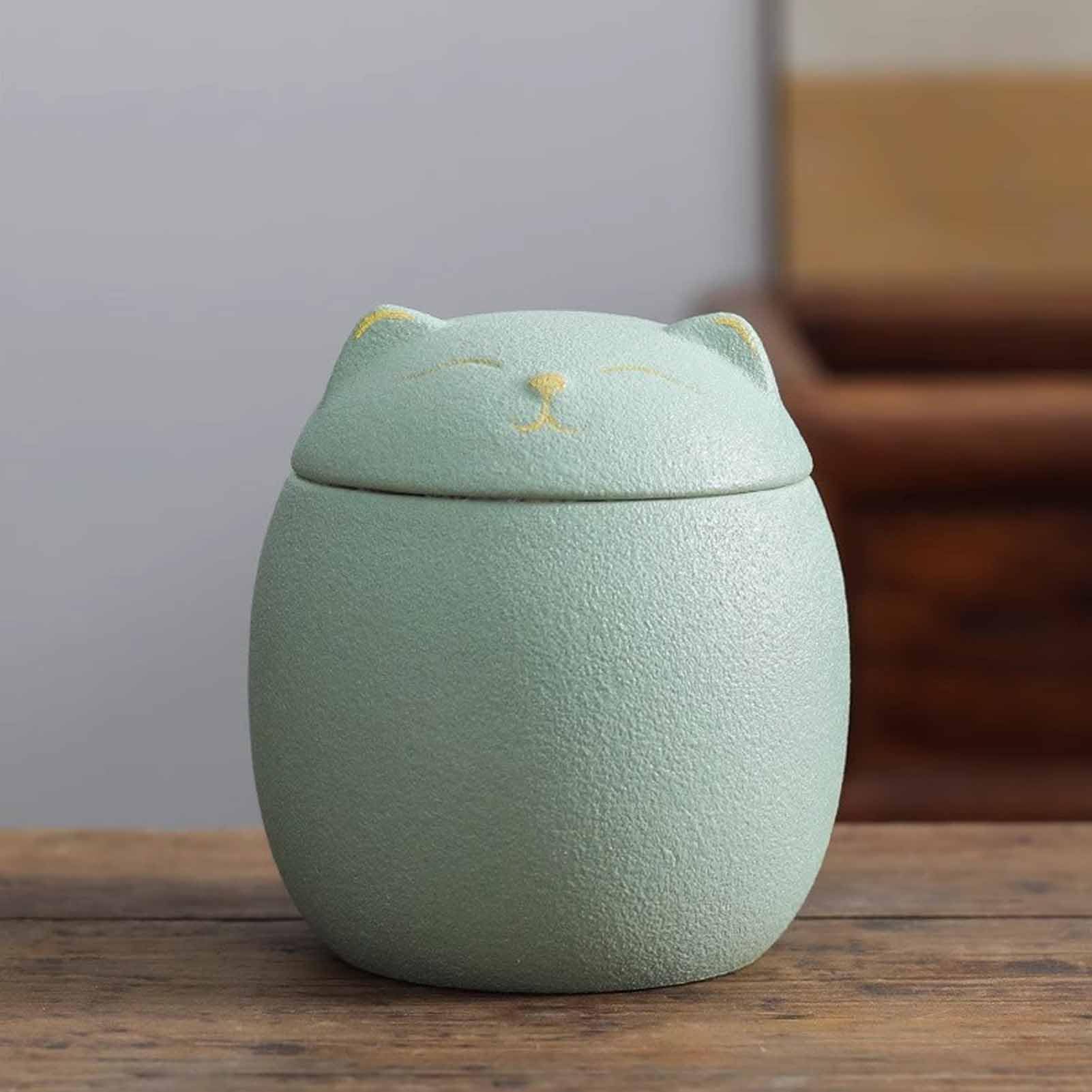
Ceramic urns are the most artistically varied. Hand-painted ceramics can feature detailed imagery — your pet's breed, garden scenes, abstract patterns — and come in virtually any shape. A ceramic urn can be a genuine piece of art that brings comfort every time you see it.
The tradeoff is fragility. Ceramic can chip or break if dropped. It's best suited for a stable, protected display location rather than a spot where it might get knocked over.
Best for: Artistic home display. Owners who want something visually unique. Living room or bedroom display where the urn won't be moved frequently.
Price range: $40–$200. Hand-painted custom pieces from artisan sellers run $100–$300+.
Not ideal for: Homes with young children or pets who might knock it over. Travel.
Metal Urns (Aluminum, Brass, Stainless Steel)
Metal urns are durable and have a clean, contemporary look. Aluminum urns are lightweight despite their solid appearance; brass and stainless steel are heavier and more formal. Metal urns often have threaded lids or friction-fit closures that seal securely.
Metal is the best choice if the urn will be moved frequently, transported, or placed outdoors. Some metal urns are rated for outdoor use and burial.
Best for: Durability and long-term use. Travel (if you want to bring the urn to scatter ashes later). Outdoor placement (sealed, weather-resistant metal urns). Burial.
Price range: $25–$150 for aluminum and stainless; $50–$200 for brass.
Not ideal for: Owners who want a warm, home-décor aesthetic (metal can feel more clinical).
Biodegradable Urns
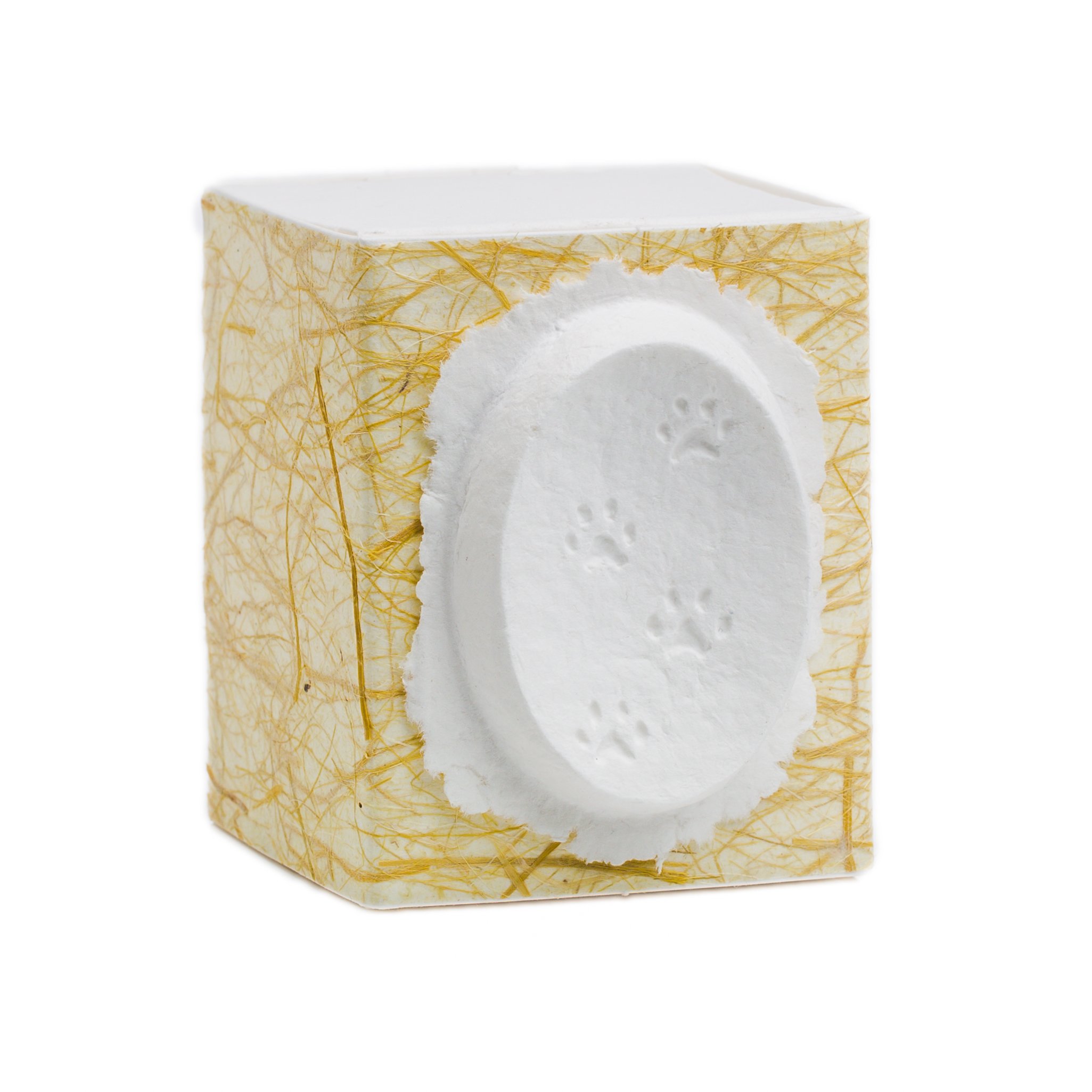
Biodegradable urns are purpose-built for burial or water placement. They're made from natural materials — recycled paper, salt, cornstarch, bamboo, coconut shell — that break down naturally in soil or water.
Some biodegradable urns are "living urns" designed to support a tree or plant seed. Your pet's ashes and the organic urn material nourish the growing plant, creating a living memorial in your garden.
Best for: Families who want to bury the urn in a garden or meaningful outdoor location. Eco-conscious owners. Water scattering ceremonies. Creating a living memorial tree or plant.
Price range: $20–$60 for standard biodegradable urns; $30–$80 for living memorial tree urns.
Not ideal for: Long-term indoor display (these are designed to decompose).
Glass Urns
Hand-blown glass urns are among the most beautiful memorial options. They're available in a spectrum of colors — deep blues, greens, ambers, purples — and some artisans offer to incorporate a small amount of ashes directly into the glass itself (similar to glass cremation jewelry).
Best for: Display in a protected location where the beauty of the piece can be appreciated. Owners who want a true art object as a memorial.
Price range: $60–$300. Artisan glass with ashes incorporated: $150–$400+.
Not ideal for: Homes with young children or pets. Frequent handling or transport.
Stone and Marble Urns
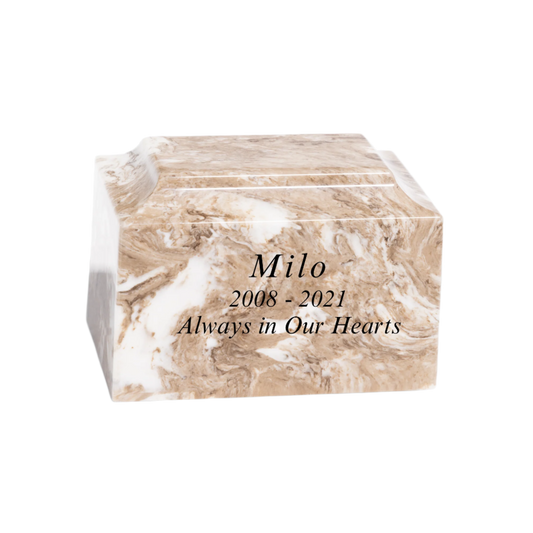
Stone and marble urns are heavy, solid, and timeless. They have a formal, dignified appearance and are extremely durable. Some are polished to a high shine; others have a more natural matte finish.
Best for: Formal display. Long-term permanent placement (mantle, bookshelf). Burial (stone and marble are durable in soil).
Price range: $50–$200 for standard marble finish; genuine carved stone starts around $100.
Not ideal for: Anyone who wants something lighter or warmer-looking.
Step 3: Consider Your Long-Term Plans
What you plan to do with the ashes matters for which urn you choose.
Keeping Ashes at Home Indefinitely
Choose wood, ceramic, glass, or stone — materials that look good as part of a home environment. Make sure the closure is secure enough that you won't worry about accidental spills. Personalized engraving or a nameplate makes the piece feel permanent and meaningful.
Burying the Urn
For burial in a pet cemetery or your own backyard, choose a biodegradable urn (if you want the urn to break down naturally) or a durable metal or stone urn (if you want the urn to remain intact indefinitely underground). Check local regulations — most municipalities allow burial of pet ashes on private property.
Scattering the Ashes Later
If you plan to keep the ashes temporarily and scatter them at a later date, a simple, functional metal or wood urn works well. You don't need to invest heavily in a permanent display piece if the urn is temporary. A basic keepsake box or simple metal urn in the $30–$60 range is practical for this purpose.
Dividing Ashes Among Family Members
Consider purchasing one primary urn for most of the ashes, plus one or two small "keepsake urns" — mini versions designed to hold a portion — for other family members or memorial jewelry. This approach lets multiple people maintain their own memorial without dividing ashes into several full-sized urns.
Custom and Personalized Urns
Personalization elevates any urn from a functional container to a true memorial. Common options include:
- Laser engraving — name, dates, a short message or poem on wood or metal
- Photo frames or inserts — some urns include a small photo panel on the front
- Breed-specific designs — ceramic urns shaped like or decorated with specific dog or cat breeds
- Paw print plaques — a clay paw print impression paired with an urn
- Custom glass — artisan-crafted glass in colors that reflect your pet's personality
Allow extra time for custom orders — engraving typically adds 1–5 business days; fully custom artisan pieces can take 4–8 weeks.
How Much Should You Spend?
You can find a quality, dignified pet urn for $35–$80. That range covers solid wood urns with engraving options, well-made ceramic pieces, and good metal urns. There's no reason to spend $200+ unless you genuinely want something artisan-crafted or exceptionally designed.
The urn market has plenty of overpriced options targeting grieving owners. A $40 hardwood urn with your pet's name laser-engraved is every bit as dignified as a $200 decorative ceramic piece — choose based on what speaks to you, not what costs the most.
Find a Provider Near You
An urn starts with having your pet's ashes. Use our pet cremation directory to find a trusted private cremation provider near you. Compare services, read reviews, and get a quote. Many providers also offer urns directly — though you'll often find better prices and selection shopping separately online.
After choosing an urn, consider whether cremation jewelry might be a meaningful complement — using a small portion of ashes in a pendant or ring while the rest remain in the urn at home.
Key terms from this page
Explore plain-language definitions for the services and ideas mentioned here.
Frequently Asked Questions
Use the 1-cubic-inch-per-pound rule: choose an urn with at least as many cubic inches of capacity as your pet's weight in pounds. A 30-lb dog needs at least 30 cubic inches; a 10-lb cat needs at least 10 cubic inches. Always size up slightly to be safe — most quality pet urns for dogs are in the 50–200 cubic inch range.
It depends on your plans. Wood is best for warm home display. Ceramic is best if you want something artistic. Metal is best for durability, travel, or outdoor placement. Biodegradable urns are best for burial or eco-friendly memorials. Stone and marble are best for formal, permanent display. There's no single "best" — choose based on where you'll display the urn and what looks right to you.
In most areas, yes — you can bury a pet urn on your own private property. There are generally no federal regulations prohibiting it. However, some municipalities have specific rules, so it's worth a quick check with your local city or county. Biodegradable urns are ideal for backyard burial; metal and stone urns will last indefinitely underground.
No. An urn is a container you purchase separately. You choose it, then transfer your pet's ashes from the basic container returned by the cremation provider into the urn. Most urns include a felt liner or bag insert to hold the ashes. Some cremation providers offer urn upgrades at the time of service — though shopping separately often gives you better selection at lower prices.
Most providers return ashes in a plastic bag inside a temporary container. Open the urn, place the sealed bag inside (many urns are designed to hold the bag directly), and close the lid. Alternatively, carefully pour or spoon the ashes into the urn using a funnel. Work over a clean surface. Once the urn is filled, secure the lid — wooden urns often have a felt pad on the base; some metal urns have threaded closures.
Find a Pet Cremation Provider Near You
Browse our directory of trusted, vetted pet cremation services across the United States. Compare providers, read reviews, and reach out directly.